
If your garage door suddenly feels like it weighs a ton on a cold January morning, there is a good chance a spring has broken. Across Carbondale, Glenwood Springs, Basalt and Aspen, broken springs are one of the most common winter calls we get. Here is why it happens more in the cold, the warning signs to watch for, and what to do if it happens to you.
What your garage door springs actually do
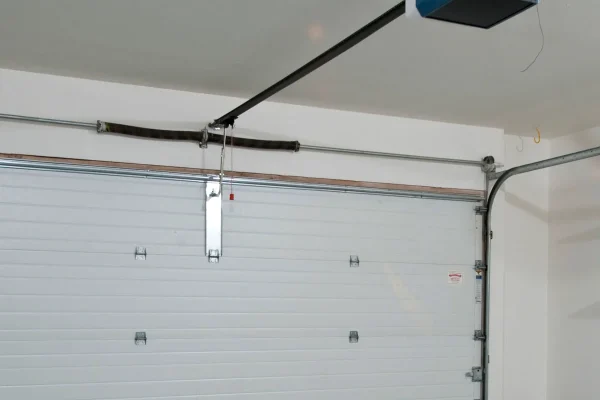
Most homes in the Roaring Fork Valley have torsion springs: one or two tightly wound steel springs on a bar above the door. They do the heavy lifting, balancing most of the door’s weight so the opener (or you) only has to guide it. Some older or smaller doors use extension springs that stretch along the side tracks instead. If you are not sure which you have, our guide to torsion vs. extension springs explains the difference.
Every spring is built for a limited number of open-and-close cycles. Each cycle twists and relaxes the steel a little, and over the years that wear adds up until the spring finally snaps.
Why springs break more often in winter
Cold weather rarely breaks a healthy spring on its own. What it does is add stress to a spring that is already worn, and that is often the last straw:
- Cold steel is less forgiving. In freezing temperatures, metal that is already fatigued is more likely to crack than to flex.
- The door works harder. Snow and ice on the door, a bottom seal frozen to the concrete, and grease that has stiffened in the cold all add resistance every time the door moves.
- Rust and road chemicals. Cars bring snowmelt and magnesium chloride from the roads into the garage. That moisture speeds up rust on springs, and rust creates weak spots.
- More use. In winter many people use the garage door as their main entrance, which means more cycles on the springs.
Warning signs of a worn or broken spring
Watch for these before you are stuck with the car inside:
- A loud bang from the garage, like a gunshot or a firecracker, often while nobody is using the door.
- A visible gap of a few inches in a torsion spring above the door.
- The door feels very heavy when you try to lift it by hand.
- The opener hums or strains, lifts the door a few inches and then stops or reverses.
- The door goes up crooked, or one cable looks loose.
- The springs look rusty, stretched or uneven.
What to do if a spring breaks
A broken spring is a safety issue, not just an inconvenience. The other spring and the cables are still under a lot of tension, and the door can fall unexpectedly. Until a technician arrives:
- Stop using the opener. Running it with a broken spring can strip its gears or burn out the motor.
- Don’t try to lift the door by hand unless you absolutely must, and never stand or let kids or pets stand under it.
- Never touch the springs, cables or bottom brackets. Adjusting or replacing torsion springs without the right tools is how people get badly hurt.
- Call for help. We offer same-day and 24/7 emergency garage door repair, so you are not left with your car trapped or your garage open overnight in freezing weather.
When we replace springs, we usually recommend replacing both at the same time, since they were installed together and have done the same number of cycles. If you use your door a lot, we can also talk with you about high-cycle springs that are rated for longer life.
How to make your springs last longer
- Get a yearly tune-up. A garage door maintenance visit before winter catches worn springs, frayed cables and loose hardware before they fail.
- Lubricate the moving parts. A garage-door lubricant that works in low temperatures keeps springs, hinges and rollers moving freely. Avoid thick grease, which stiffens in the cold.
- Keep the bottom seal clear. Sweep away snow and water at the base of the door so it doesn’t freeze to the floor.
- Check the balance. With the door closed, pull the emergency release, then lift the door to about halfway. A well-balanced door stays put. If it slams down or shoots up, the springs need adjustment by a pro. If you are not comfortable doing this, skip it and let a technician check.
Spring repair across the Roaring Fork Valley and beyond
Quick Garage Door Repair is based in Carbondale and replaces garage door springs throughout Garfield, Pitkin, Eagle and Summit Counties. If your door is heavy, noisy or making that dreaded bang, call us at (970) 794-7889 or book online, and we will get your door working safely again.
Tip: join our free membership to save on every service, including spring replacement and yearly tune-ups.
