
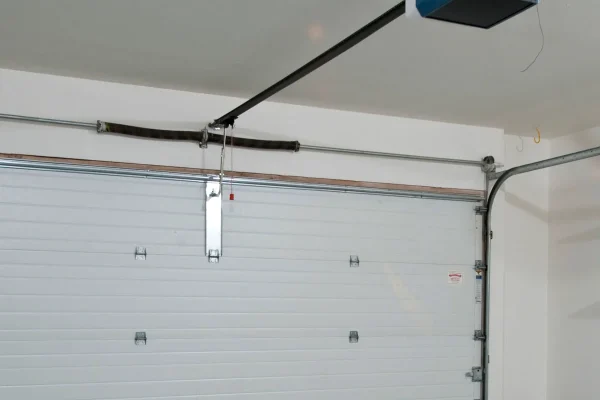
Every garage door has springs that do most of the work of lifting it. The opener only guides the door; the springs counterbalance its weight. When a spring breaks, the door suddenly feels like it weighs hundreds of pounds. Most residential doors use one of two types: torsion springs or extension springs. Here’s how to tell which one you have and what it means for repairs.
Torsion springs
Torsion springs are mounted on a metal shaft above the door, usually in the middle. As the door closes, the springs twist and store energy; as it opens, they unwind and help lift it. Torsion systems are common on modern doors and heavier doors. They tend to give a smoother, more controlled lift and keep the door better balanced.
Extension springs
Extension springs run along the horizontal tracks on each side of the door, above the rails. They stretch as the door closes and pull it up as it opens. They’re often found on older or lighter doors. Extension springs should always have a safety cable running through the middle, so a broken spring can’t whip across the garage.
How to tell which springs you have
- Torsion: look above the closed door for one or two thick coiled springs on a bar across the top.
- Extension: look above the tracks on each side for long springs that stretch when the door is down.
How long do garage door springs last?
Spring life is measured in cycles: one open and one close. Standard springs are commonly rated around 10,000 cycles, which can be several years for a family that uses the door a few times a day. Cold weather, rust and a door that is out of balance can shorten that. On doors with two springs, it’s common to replace both at once, because the second one is usually close to failing too.
Signs a spring is broken or wearing out
- A loud bang from the garage when no one was using it
- The door feels very heavy or won’t lift more than a few inches
- A visible gap in a torsion spring coil
- The door rises unevenly or sits crooked
- The opener strains, stops or reverses
Why spring repair isn’t a DIY job
Garage door springs are under very high tension. Winding bars slipping, a spring breaking during adjustment or a cable letting go can cause serious injury. If you think a spring is broken, stop using the door, keep people and cars clear, and call a professional. That’s what our garage door repair team does every day.
Garage door spring repair in Carbondale and the Colorado mountains
Quick Garage Door Repair replaces torsion and extension springs across Carbondale, Glenwood Springs, Aspen, Vail and surrounding mountain communities. Most spring and cable repairs take one to two hours, every repair is backed by our 90-day repair guarantee, and we offer 24/7 emergency service. Learn more about our spring repair service or call (970) 794-7889, or book online. If your door is older and needs repair after repair, it may be time to look at a new garage door.