
Your entire day stalls when an automatic garage door opener fails at the most important time. Beyond the inconvenience, a malfunctioning door exposes your home to unnecessary security risks. While many homeowners assume they need an expensive replacement, most common issues are highly predictable and easy to diagnose.
If you are looking for garage door opener repair near me, taking a few minutes to understand where the system breaks down can save you a costly diagnostic service call. A systematic troubleshooting approach helps you fix garage door opener issues by isolating electrical, physical, or sensor faults faster than random guesswork.
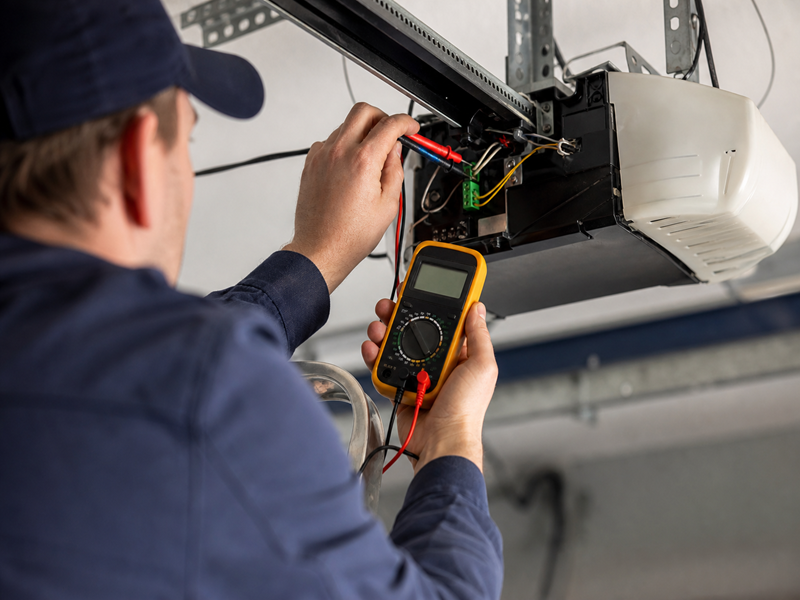
Restore Safe & Reliable Garage Door Operation
5 Common Garage Door Opener Faults & How to Fix Them
When your system stops responding or behaves erratically, use this step-by-step checklist to target the failure point with confidence.
1. Remote Control or Wall Switch Not Responding
When an electric garage door opener fails to respond to any commands, the root cause is almost always a breakdown in power delivery or frequency signal. Ruling out these fundamentals first is the quickest way to fix garage door opener commands before assuming the unit itself has failed.
- Verify the Main Power Source: Ensure the overhead motor unit is securely plugged into the ceiling outlet and receiving power.
- Test the Breaker or GFCI Outlet: Garage outlets are often tied to a GFCI circuit. Check your home’s electrical panel to ensure a breaker hasn’t tripped.
- Replace Remote Batteries: Swap out old coin-cell batteries before assuming the remote hardware has failed.
- Isolate the Wall Control Button: If your hardwired wall switch works but the wireless remotes do not, the issue is strictly a signal or programming error.
Pro Tip: Reprogramming your remote to the main receiver unit solves signal failures instantly—especially after a sudden power outage or battery change resets the rolling code pairing.
2. Why Won’t My Garage Door Close? (Safety Sensor Realignment)
Photo-eye safety sensors located at the base of your door tracks are designed to prevent the door from crushing objects. If these sensors become dirty, blocked, or knocked out of alignment, the door will refuse to close and will bounce back up.
- Check the Sensor Indicator Lights: Solid LED lights indicate a healthy connection. A blinking or dark light means the invisible safety beam is broken.
- Clean the Lenses: Wipe away dust, dirt, or spiderwebs using a clean microfiber cloth.
- Realign Sensor Mounting Brackets: Gently bend the flexible metal brackets by hand until both sensor lights stay perfectly solid.
- Remove Hidden Obstructions: Ensure lawn equipment, trash containers, or overgrown weeds aren’t crossing the beam path.
Pro Tip: This is the number one cause of intermittent garage door problems that appear randomly without an obvious physical explanation.
3. Blocked, Misaligned, or Damaged Door Tracks
An obstructed or bent track forces the opener motor to push against extreme physical resistance. This triggers the motor’s built-in safety reverse mechanism, making the door stop midway.
- Inspect Both Track Sides: Look along the length of the metal tracks for any obvious bowing, dents, or gaps.
- Clean the Track Channels: Clear away any accumulated grime, hardened grease, or debris that could snag the rollers.
- Tighten Track Hardware: Use a wrench to tighten loose mounting bolts anchoring the tracks to your garage walls.
Pro Tip: A seriously warped track requires professional garage door track repair. Attempting to hammer a structural bend back into alignment can permanently warp the metal and ruin your rollers.
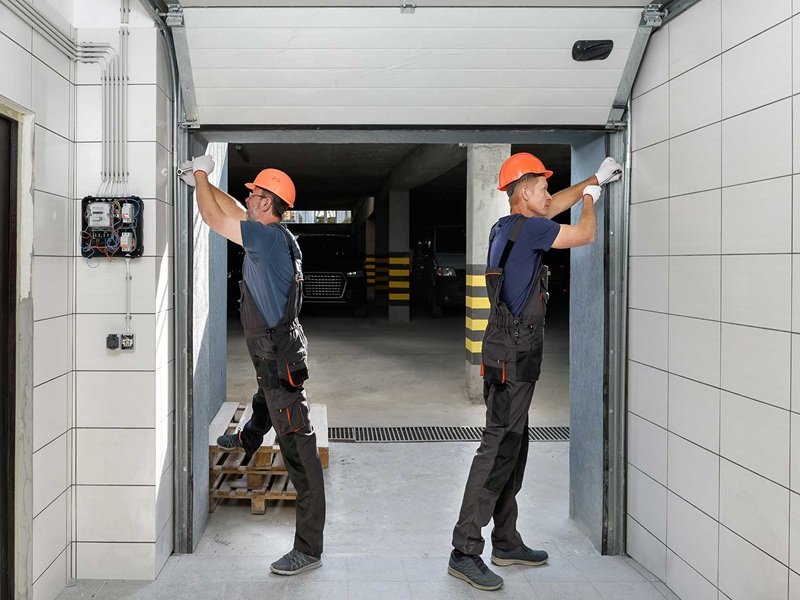
4. Sluggish Movement & Worn Drive Components
Whether you operate a chain-drive, belt-drive, or screw-drive opener, mechanical parts experience standard wear and tear; heavy grinding or scraping noises mean internal drive components are failing, and catching this early can help you fix garage door opener noise before it turns into a full breakdown.
- Apply Proper Lubrication: Spray a high-quality, silicone-based garage door lubricant onto the drive chain or screw rail. Avoid heavy grease, which traps dirt and grit.
- Check the Trolley Carriage: Inspect the emergency release trolley to ensure it is fully engaged with the drive mechanism.
- Listen for Motor Humming: If the motor hums but the chain or belt doesn’t move, the internal nylon gears may be stripped.
5. Adjusting Inaccurate Travel Limit Settings
Travel limits dictate exactly how far the opener moves the door down to close or up to open. If these limits are incorrect, the door will slam against the floor and bounce back up, or stop several inches short of the ground.
- Locate the limit dials: Find the designated limit adjustment screws or digital buttons on the side or back of your garage door motor casing.
- Calibrate the down travel: If your door hits the floor and reverses, turn the “down” limit screw slightly counter-clockwise (toward the minus sign) to reduce downward travel.
- Calibrate the up travel: If the door doesn’t open fully to clear your vehicle, turn the “up” limit screw clockwise to expand total opening clearance.
- Run a complete test cycle: Operate the door completely. Fine-tune with micro-adjustments until the bottom weather seal rests flush against the concrete floor.
Trusted Local Garage Door Opener Repair & Diagnostics
Most minor automatic garage door opener issues give you warning signs—like slow operation, strange humming sounds, or sudden pauses long before a total breakdown occurs. Paying attention to these signals early can help you fix garage door opener problems yourself and save you from a major emergency garage door repair job later.
If your troubleshooting points to a broken torsion spring, frayed cables, or a completely burned-out motor, attempting a DIY fix can be incredibly dangerous. It pays to have a certified, fully insured local expert step in.
At Quick Garage Door Repair, we offer professional same-day garage door service to resolve your opener issues safely and accurately. Whether you need a simple gear replacement or a brand-new smart garage door opener installation, our technicians arrive fully equipped to fix the problem on the first visit.
Get Expert Garage Door Troubleshooting
Frequently Asked Questions
How do I know if my garage door opener motor has burned out?
A burned-out motor usually produces a humming sound with no movement, or the unit stays completely silent despite receiving power. A technician can confirm this with a quick internal inspection.
Can weather affect how my garage door opener performs?
Extreme cold can thicken lubrication and slow drive movement, while heat and humidity can cause metal components to expand, creating additional friction. Seasonal maintenance helps the opener handle temperature changes without performance drops.
How often should a garage door opener be serviced?
A professional inspection once a year is generally recommended for most residential openers. Homes with high daily usage may benefit from a check every six months to catch wear before it affects performance.
 Quick Garage Door Repair
 189 J W Dr, Unit D, Carbondale, CO 81623
